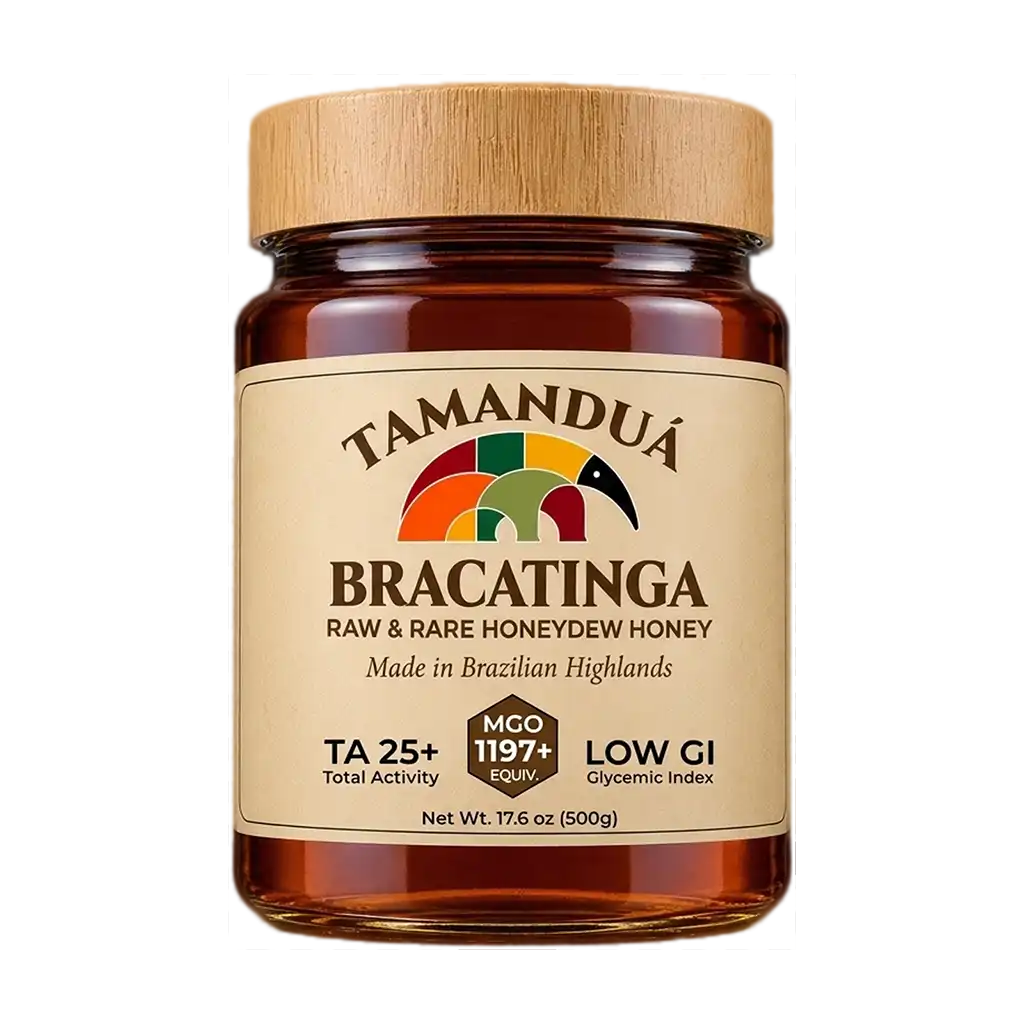
A rare honeydew harvest from Brazil’s southern highlands. Product claims shown only when verified.
Tamandua Honey

Clear answers

Questions deserve more than a marketing line.

Short answers, visible evidence boundaries, and no hidden leap from laboratory research to product promise.

No. It is a honeydew honey. Bees collect a sugar-rich honeydew associated with sap-feeding scale insects on Bracatinga trees rather than floral nectar.
Not yet as a verified product claim. Organic will appear only after a valid certificate is reviewed for the specific product and intended market wording.
The regional Planalto Sul Brasileiro registration exists. Tamandua will claim product eligibility or show the seal only after its specific authorization and traceability documents are verified.
No universal conversion has been established for Tamandua Honey. TA and MGO measure different things, and a comparison requires lot-specific testing and a documented method.
No. Do not give honey to children younger than 12 months because of the risk of infant botulism.
Tamandua Honey is a food, not a medicine. Laboratory studies do not establish that eating the product prevents, treats, or cures disease.